Books that feel like forgotten fairytales
I love fairy tales, both the classical and the less obvious ones. Therefore, I present you a complex guide to my personal favourites: retellings of the classics and books that should be considered fairytales but somehow, they haven’t been discovered yet.
What is a fairy tale?
It is hard to give one, specific definition of a fairy tale, however, there’re some qualities that are characteristic of a fairy tale.
• There isn’t any specific border of the human and supernatural worlds and a protagonist easily crosses it.
• In the supernatural world, there are magical beings like fairies, dwarfs, witches and human princes, princesses and kingdoms.
• The time and place of the plot is uncertain and unspecified.
• A fairy tale always and with a happy ending, id est the winning of the Good and loosing of the Evil.
• A true love, as well as other moral ideas, are the most important values which always win at the end.
Knowing these factors that make a story a fairy tale, you can easily observe that even now, in the 21th century, literature is still full of modern fairy tales. Within this post, I will assume that a fairy tale is a story strongly inspired by any folklore, bonus points for using an aesthetic inspired by medieval times (knights, kings, princesses etc.). After it’s determined, now I will introduce you the best of modern fairy tales.
#4
Rouge by Mona Awad
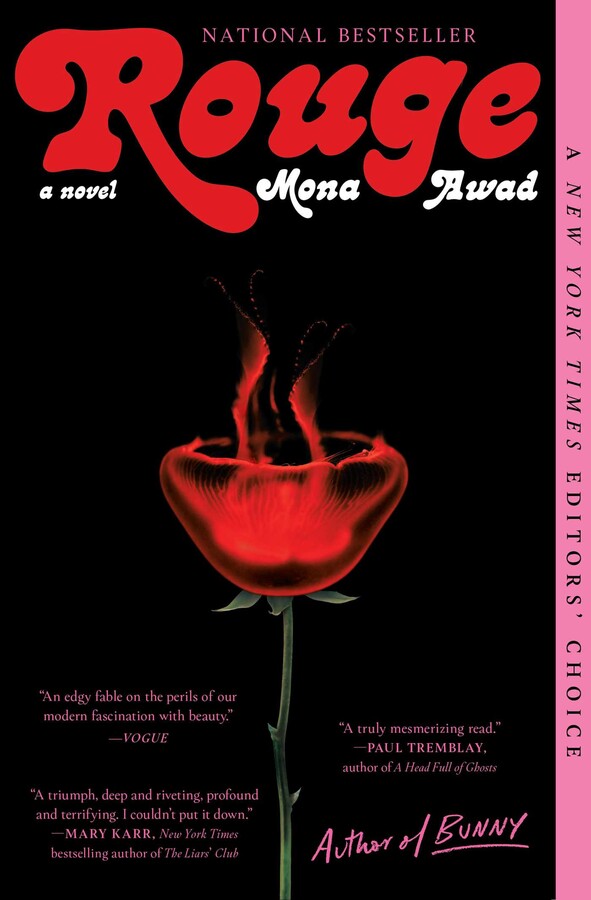
Cover image © Scribner and Schuster.
Belle is a woman raised by a beauty.
Her mother, Noelle, has always been a reason of praise in men and of envy in other women... Including Noelle's own daughter.When Noelle dies in a mysterious way, addicted to skin care and scared of looming ripe age Belle discovers a secret society her mother has been a member of - 'Rouge'. It's a group of the fellow obsessed by ever-lasting beauty dream and their methods of beauty therapies are... quite unusual.
Let's just say that these methods involves help of jellyfish and vanishing of traumas.
Although ‘Rouge’ doesn’t seem like a fairy tale, it is in fact deeply connected to the various folklores what I discussed more precisely in a dedicated post. Mona Awad creates some kind of a modern gothic fairy tale, using numerous motives taken straight from the original fairy tales.
The story of Belle reminds me about ‘Snow White’, whose Stepmother, the Evil Queen, is also obsessed about beauty. This superficiality is deeply demonised by both ‘Snow White’ and ‘Rouge’. Furthermore, both of the works try to remind the reader that not everything is about beauty. ‘Snow White’ glorifies the titular character, who not only were pretty on the outside, but also her heart was made of gold. Snow White is a protagonist because of her Good, in contrast to the Evil Queen who is selfish and vain. The same situation takes place in ‘Rouge’, despite the fact that Mona Awad doesn’t add any hero to her story. In ‘Rouge’ there is only the Evil Queen.
Not only the beauty connects the Evil Queen and Belle. The motif of a magic mirror appears in both stories, too. In ‘Snow White’ the mirror is a reflection of the Evil Queen’s vanity, and the same trait does the Belle’s mirror represent. Also, as I now think about it, the colour palette of ‘Rouge’ is also very ‘Snow White’ coded. Black, red and white – that's colour that are dedicated to Snow White and the graphic designer of the cover of ‘Rouge’ clearly references to these colours.
The whole atmosphere of ‘Rouge’ itself is very fairy-tale-like: a surrealistic fantasy novel, gothic and mysterious. The costal residence of Rouge reminds me of some kind of gothic castle, luxurious and with all of these candles. Definitely worth reading if you’re ready for a combination of fairy tale motives and horror-comedy surrealism.
#3
A Day of Fallen Night by Samantha Shannon
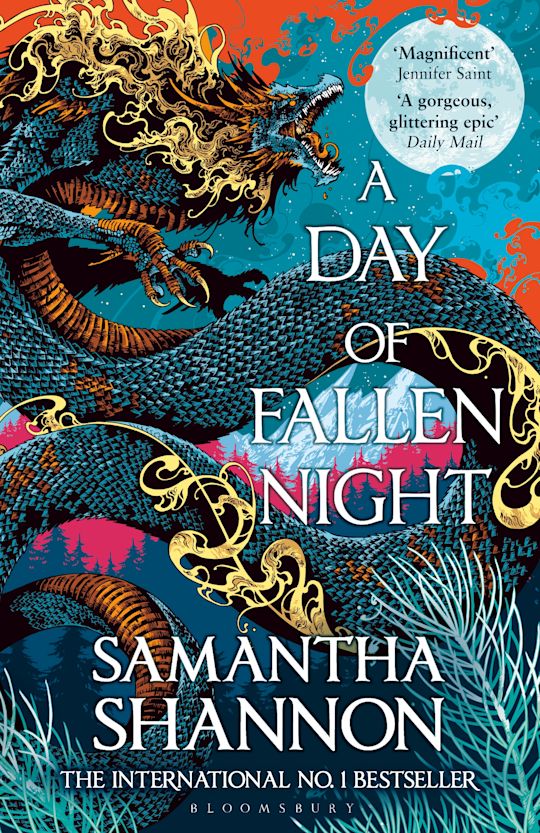
Tunuva Melim is a sister of the Priory. With her life-long partner Esbar uq-Nāra, she lives a happy life despite living with the ongoing fear of the Nameless One's return. The sisters still train in breathtaking fighting sequences to defeat wyrms. But among the youth develops a crisis of faith in the Mother and a reason of the existance of the Priory. A symbol of unfaithfull young generation is Siyu uq-Nāra, a birthdauther of Esbar, a girl who perpetrates various sacriledges against the Mother. Siyu will become a reason why Tunuva will experience a rising of the mythical wyrms, the Nameless One's servants.
Dumai is a godsinger living in The High Temple of Kwiriki in the highest parts of mountains. Dumai's spend her whole life at the summits, serving the dragon god Kwiriki with her mother Unora. Her peaceful existance stops when someone from her mother's past appear in The High Temple. Soon, Dumai will have to leave mountains for the first time to serve - not Kwiriki this time but an empire she's related to. Dumai will come across courtly intrigues and a dragon she'll create a bond with.
Glorian Berethnet is an only successor of Sabran VI the Ambitious, a queen who ended the Century of Disconent. Sabran is a perfect queen of Inys but Glorian doesn't feel like she'd want to follow in her mother's footsteps and become a mother. Being a mother is the main role of the Berethnet queens - it is believed to be the only way to keep the Nameless One asleep. But Glorian preferes to be in her parent's shadows and only for now she is able to maintain this state.
These three women, unconnected at the first sight, will come across the same danger - the propable second raise of the Nameless One, the encarnation of evil.
Remember all these fairy tales and legends about heroic knights and warriors, and their princesses? Then, think how many times they would be better if all of these deeds were made by women! Samantha Shannon, my favourite female author, creates absolutely stunning, epic universe with females at the centre. She breaks a habit of toxic masculinity in fairy tales and constructing stories with men being heroes and women – victims waiting to be saved. In ‘A Day of Fallen Night’ (shortly NIGHT), none of the female characters remains passive when a danger is looming. Samantha also disagrees with the stereotype in fairy tales that female characters have only one personality trait – her heroines are complex and greatly written.
Despite breaking with patriarchal norms in medieval fairy tales, Samantha doesn’t relinquish the motif appearing in all the popular legends – love! Her heroines fall in and out with love, both romantic and platonic, creating beautiful romances and friendships. Once again leaving the norms in the past, Samantha doesn’t repay the patriarchy with misandry in exchange of centuries of misogyny. Samantha proves that feminism isn’t about hating men, creating also great and realistic male characters. But yes, she emphasizes women in her storytelling – they just play bigger role in the plot. Glorian is a queen of the most important queendom in the story, Dumai is a daughter of an emperor that is able to communicate with dragons, and Tunuva and Esbar are sisters in the most powerful Priory that is female oriented.
So, don’t be afraid that Samantha Shannon created some kind of woke story! It's perfectly logical and normal, thus that’s great that she popularises normality of feminism in her fantasy sagas. Worth reading not only because of the fantastic plot, but also ideological value. I highly recommend!
#2
Once Upon a Broken Heart
by Stephanie Garber
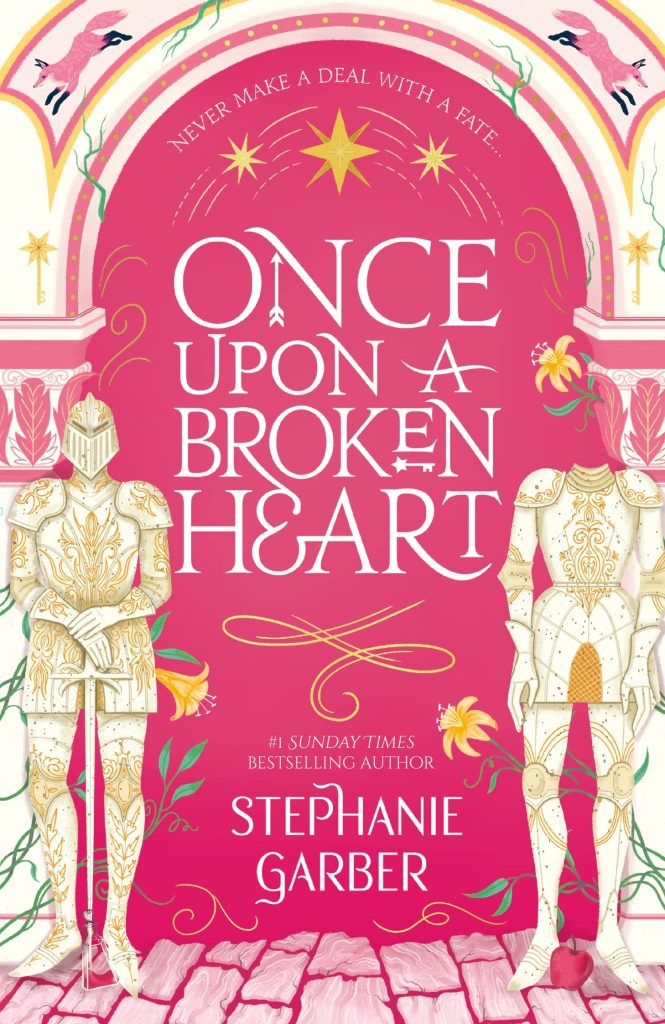
Evangeline Fox is a girl believing in true love and she has always known that she will find her someday. But when a boy she considered to be her love of the whole life, he is planning to marry her step sister. Evangeline is so desperate to stop the wedding from happening that she impulsively makes a deal with Jacks. He's a Fate, known as Prince of Heart. And no matter how much his nick suggests him to be a sensitive romantic, he's in fact - ironically - heartless.
Jacks propose to Evangeline that he keeps the wedding from happening as long as Evangeline will promise him three kisses. And the first kiss reveals the wicked plan of Jacks that will lead to a catastrophe in Evangeline's life...
———• ☾ •———
‘Once Upon a Broken Heart’ is a series set in the world of ‘Caraval’ by Stephanie Garber. And I genuinely think that these books are so magical that they can transport you strait to the fabulous lands lived by Fates. Not only the magic structure of this world is stunning, but also the atmosphere is taken straight from the fairy tales we all know. Princesses and princes, fabulous balls, dark castles... We even got magic curses!
‘Once Upon a Broken Heart’, as the title alone suggests, is concentrated around love (mostly breaking hearts). Thus, the curses mentioned before also are love curses. This obsession about love perfectly fits the fairy tale style of the novels – romantic love was a pretty valid motif in the medieval fairy tales as I mentioned before. In the world of ‘Once Upon a Broken Heart’ fairy tales themselves are important - ‘The Hunter and the fox’, Evangeline’s favourite fairytale, is constantly recaptured throughout the plot and in the dialogues. Stephanie Garber seems like she weaved the whole literary universe with the fairy tale motives, and a lot of sweet, giggling charm. To sum up, that's definitely one of these books popular on Tik Tok I recommand you wholeheartedly!
#1
The School For Good and Evil
by Soman Chainani
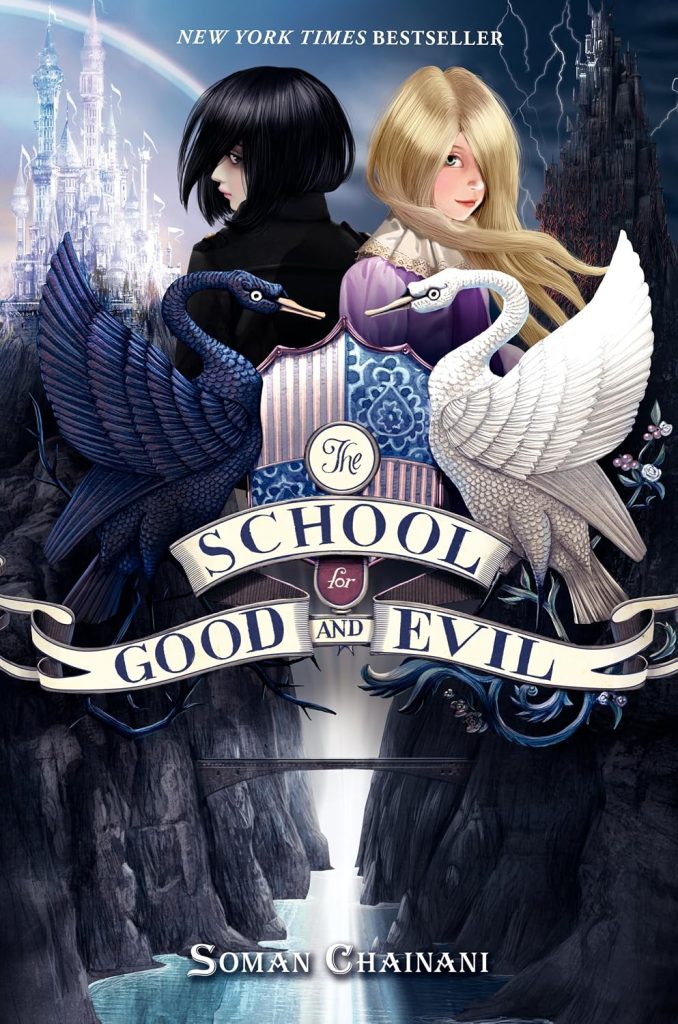
I love, love, LOVE these books more than any other work of art in the world. They were the most valid factor that shaped me as a human, my values, my view of the world. I once read them as a little girl and now, when I am an adult, I can’t imagine my life without them.
Sophie and Agatha are best friends living in a small village called Gavaldon. Once a year, a pair of the Gavaldon’s children is kidnapped by a mysterious School Master to the School for Good and Evil, a fabulous academy training both heroes and villains. Sophie believes that she and Agatha will be chosen this year.
Since Sophie is beautiful and beloved by the whole village, everyone is sure Sophie will be kidnapped to the School for Good and will become a princess she always wanted to be. Agatha, however, is a lonely, spectral outcast, living in a creepy cemetery with her mother and ugly cat. She seems like a real-life witch, so Sophie and all of the villagers consider her the next villain of the School for Evil.
When the landmark day comes, the unthinkable happens – Sophie become chosen to be a student in the School for Evil, and Agatha – the School for Good. What at first seems like a mistake, soon will expose the misconception everyone used to have about the girls whose souls aren’t the one their façades would suggest. Buth the School Master is right all along about Agatha’s Good and Sophie’s Evil, what they both will have a hard time discovering and understanding.
———• ☾ •———
As I said in my deep dive of the Hophie ship, SGE literally shaped me. Primarly, it is beautiful story about friendship and love. The characters build deep bonds with each other, becoming a true family. It references to the fairy tale motif of the absence of at least one parents or the biological family as a whole, and Soman Chainani is proving that we can choose our families by ourselves, we don’t need the biological one when it isn’t around. The most obvious one is the friendship between the Coven: Hester, Anadil and Dot.
Also Sophie and Agatha create this kind of friendship, a beautiful bond that saved both of them. The girls teach each other how to love, and what the other can mean to one. They become inseparable, constituting my aim in friendship field.
Therefore, Soman Chainani partly by the creation of the Sophie and Agatha’s friendship, block out the male gaze, traditional for fairy tales, in his books. Sophie and Agatha are young women who doesn’t meet the patriarchal expectations. Agatha isn’t pretty as an average princess and then: queen, and Sophie is becoming more and more independent throughout the series. In fact, both of the girls at the beginning are addicted to the patriarchy, Sophie with her constant obsession about beauty and playing a role of the decent young woman, and obviously her fixation on betting a prince, and Agatha with her insecurities caused by the system. And although Agatha’s attachment to the patriarchy ends at the end of the 1st novel, it takes Sophie a lot longer to understand that she doesn’t need a man nor to keep a certain beauty standard.
Secondly, the whole idea of love in ‘The School for Good and Evil’ series is absolutely adorable and educative. Not only do the characters (mainly Sophie) experience toxic relationships, proving to the young reader the consequences of them, but also do create beautiful love stories. As you can read about in my essay about Hophie (Hort x Sophie ship), it is my favourite ship in the whole literature, and it is so well-written. Soman Chainani proves that a true love is about loving each other for who they are. Also, the best part of the love stories in ‘The School for Good and Evil’ is that they aren’t used as a reason of a character development. Everyone grows up on their own, and love is just a cherry on top after all.
And what’s also great about ‘The School for Good and Evil’ is that it would be as perfect if it wouldn’t be a retelling of the King Arthur legend (especially in the 4th – 6th book, id est 'the Camelot Years'). The story, the characters, the world, it’s all just qualitative on its own. So, I wholeheartedly and strongly recommend these books to anyone not only interested in folklore but any reader who want to experience a touching journey about friendship and love.
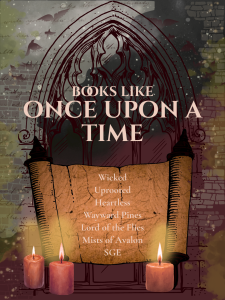
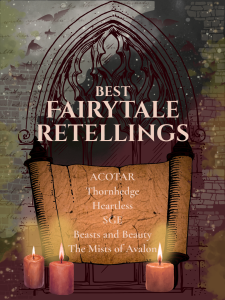
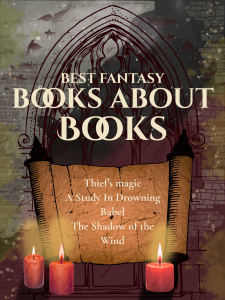
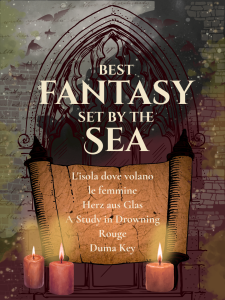
[…] 4 Books that Feel Like Forgotten Fairytales […]
[…] 4 Books that Feel Like Forgotten Fairytales […]
[…] 4 Books that Feel Like Forgotten Fairytales […]
[…] Eager to discover lost fairy tales?Read the inventory of my Archive of the Forgotten Fairytales… […]