Feminism In ACOTAR by Sarah J. Maas
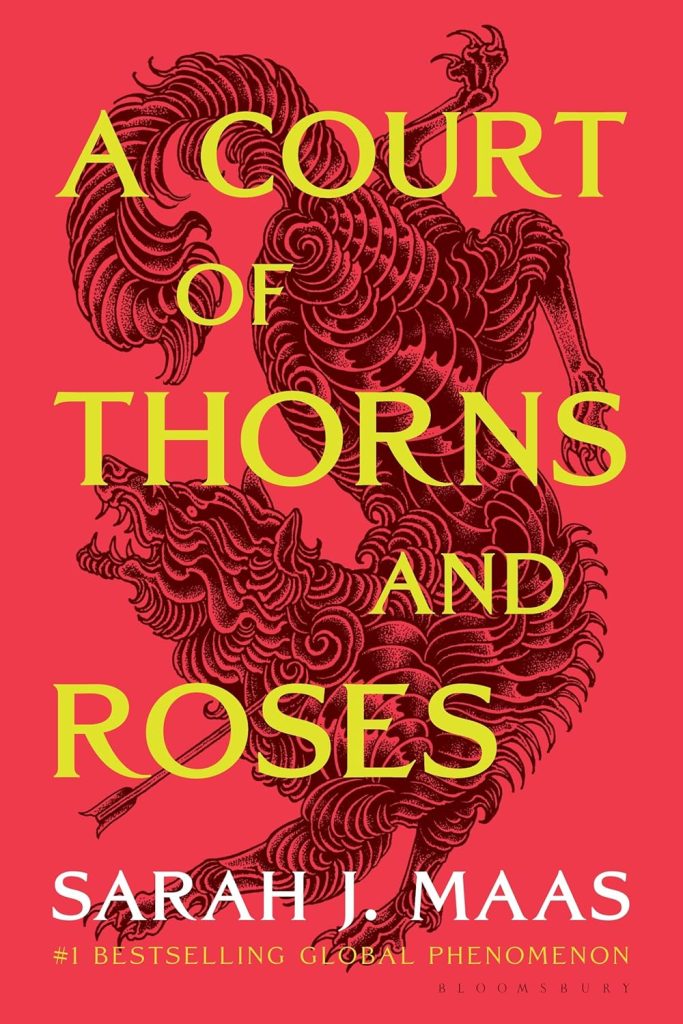
Feminism is a great part of my identity, as well as reading fairy tales. ACOTAR by Sarah J. Maas was meant to be a progressive fairy tale retelling about a strong heroine, who doesn’t need Prince Charming to save her. The symbol of ‘feminist content’ in ACOTAR is Rhysand, High Lord of the Night Court and Feyre’s mate and lover. Too bad the reality isn’t that great and ‘woke’ Sarah J. Maas wanted her series to be. And what Sarah J. Maas calls ‘feminism’ in ACOTAR is actually damned nonsense.
1. Rhysand & Feminism
Rhysand from the ACOTAR series is probably one of the most popular book boyfriends that charmed millions of girls and boys all over the world and TikTok. But honestly? He’s always made me smirk far more than blush. And I don’t understand his phenomenon - for me, Rhysand is just caricatural. Not hot. And similar with his 'feminism'.
1.1 Rhysand as a grotesque character
Rhysand appears for the first time in the series during the Calanmai night in ‘A Court of Thrones and Roses’. He is depicted as the most masculine man of all masculine men, as the most dark man of all dark men, as the most sensual man of all sensual men. But Rhysand instantly turns into a parody of himself. From dangerous and hot, Rhysand turns into a Molière character whose traits are absurdly exaggerated. It is like he obscurity-maxxes what only makes him pathetic.
Sadly, a similar case is with Rhysand’s feminism. When you try too hard as an author to write a character with one exaggerated trait, it ends up as a parody. Thus, while Rhysand’s most emphasised feature is his wokeness and feminism, it all leads to the impression that it is all a memetic caricature.
Rhysand is such a perfect example of performative feminism in ACOTAR, written even before this term existed. If only he could, Rhysand would drink matcha reading performatively Margaret Antwood. And of course, Rhysad is all talk and the ratio between his feminist statements and actions is hilarious. Because it doesn’t matter if you verbalise your feminism when you don’t follow feminist beliefs in real life.
1.2 Rhysand & His feminism Under The Mountain
Rhysand, presented in the next volumes as a supreme feminist, presents himself in the worst way as a woke person Under the Mountain. He objectifies Feyre throughout the whole ‘Under the Mountain’ arc. And you can claim that it is all a mask, that he actually protects Feyre and his friends back in Velaris. And maybe that’s true. But you can’t explain what Rhysand does when making a pact with Feyre. He marks her as if she was a calf! As if she was his possession! It is so humiliating I don’t think I have to explain it.
I know that all those girls on TikTok that are obsessed with Rhysand and treat him as the greenest flag would lose it after this statement. They would claim that it is - again - the Amarantha’s fault, that Rhysand does it all for his family. Okay. Watch this.
1.3 Rhysand & his feminism in ACOMAF and ACOWAR
"Feyre is High Lady* of the Night Court. My equal in every way"
Rhysand in 'A Court of Mist and Fury' by Sarah J. Maas
* to remind you, in English words generally doesn't have specified gender. Thus, using a separate word for a woman, just like 'a lady' emphasises the female form and a difference between male and female doing the same job.
I'm not even going to mention the etymology of the term 'a lady' which originally meant 'the wife of a lord'. Not so feminist in my opinion.
In ACOMAF - ‘A Court of Mist and Fury’, the second volume of the series - the central story is the pact Feyre and Rhysad signed in ACOTAR. Feyre promised that she would visit Rhysand in the Night Court once in a month for a week. And I remind you - this is the volume Rhysand presents his feminism in. However, he treats Feyre as a kidnapped bride or trophy, absolutely not as a free human - or more Fae - being. Furthermore, Feyre becomes a subject matter of the conflict between Rhysand and Tamlin, like she was some kind of a belonging of either of them.
In ACOMAF, Rhysand acts like some kind of a feminist apostle, pointing Feyre that Tamlin paranoically controls her. Funny enough, Rhysand restrains Feyre in the same way! Moreover, Rhysand's obsession with controlling Feyre's love life paired with his feminist words is even more funny.
While Rhysand knows that he is Feyre’s mate, but they still don’t date each other, Rhysand too often suggests that he wouldn’t approve if Feyre had a love life apart from with him. Of course, he doesn’t tell it that straight-forward, only passive-aggressively. However, Rhysand thinks as if he owned Feyre as a partner only because he is her mate. It's pretty patriarchal to think that your love automatically makes a woman obligated to become your possession…
But that’s only the beginning of Rhysand’s hypocrisy when it comes to feminism.
2. Rhysand feminist hypocrisy: Feyre’s pregnancy
When Feyre and Rhysand finally start to date, Feyre eventually gets pregnant. And that’s my greatest argument that reveals Rhysand’s performativity. Thus, while my previous rant may not bring those TikTok girls to their senses, this is the most valid problem with feminism in ACOTAR. And it makes me shake with rage SO badly.
Rhysand literally goes crazy after discovering Feyre’s pregnancy. Absolutely literally. Rhysand starts to control Feyre’s life through and through, which is especially disgusting considering his previous hate for Tamlin. And honestly? I don’t see a difference between Rhysand in ‘A Court of Frost and Starlight’ and ‘A Court of Silver Flames’ and Tamlin. I really don’t.
Rhysand literally fences Feyre in a magic barrier, separating her from the outer world. It's crazy that Feyre can’t be touched directly by other characters other than Rhysand without his consent… It may be even worse than Tamlin’s behaviour, because Feyre’s ex at least didn’t control the body of Feyre. Thus, Feyre can’t be kissed on the cheek by Cassian in one scene. Moreover, Feyre can’t normally communicate with her sister Nesta without Rhysand approval because “he is worried about Nesta”. Obviously, Rhysand still is pissed off with Tamlin, but ironically, he acts exactly the same.
2.1 Tamlin and Rhysand. feminism in acotar males
And I love how Feyre doesn’t even notice how controlling Rhysand becomes! However, every little mention about Tamlin makes Feyre anxious, but when her husband literally acts like her ex, everything is perfect. I love, LOVE how Tamlin is toxic because he controlled Feyre, and at the same time Rhysand is a romantic for the same reason. Incredible hypocrisy.
Feyre doesn’t notice that Rhysand literally treats her as if she stopped being an independent individual. That her husband perceives Feyre as an incapacitated person, not a pregnant woman! Obviously, all of these things are explained as a consequence of the Mating Bond. I shouldn’t even be explaining how harmful this is.

3. The Great Feminist Metamorphosis of Feyre
Speaking of Feyre Archeron, let me also analyse her approach to feminism that is truly bizarre. Firstly, Feyre is supposed to be ‘saved’ from the patriarchal Spring Court, all thanks to Rhysand and his woke propaganda. Especially in ACOMAF, Feyre is portrayed to have changed from a gentle lamb to a militant heroine because of the events Under the Mountain and her visits to the Night Court.
However, it is all nonsense. Feyre has never been a weak tradwife what Sarah J. Maas wants me to believe. Feyre has always been proactive and bold. She was the one who took care of the Archerons before the times of ACOTAR. Feyre used to hunt for her family to eat, and even after going to the Spring Court she remained brave. She actively rebelled against keeping her hostage, she tracked the Suriel and tried to run away from the Spring Court and Tamlin. Finally, Feyre saved Tamlin and other Faes from Amarantha.
But Feyre numerously repeats in ACOMAF that she no longer feels like her previous self, that she is now changed. So why create the illusion that Feyre turned into a heroine if she literally used to be one? My theory is that Sarah J. Maas wants us to believe that Feyre’s stays in the Night Court changed her so deeply. Thus, Rhysand would once again become the apostle of feminism. That’s why Sarah creates the contrast between the bad, patriarchal Spring Court and the good, feminist and liberal Night Court.
3.1 The Star & night Triumphant
On the other hand, Feyre is another example of hypocrisy of feminism in ACOTAR. She is at the same time combative heroine and says those disgusting words:
"If Rhysand was Night Triumphant, I was the star that only glowed thanks to his darkness, the light only visible because of him."
Feyre about Rhysand in 'A Court of Wings and Ruin' by Sarah J. Maas
Feyre Darling, girl… Please, you are so much more than just the Rhysand’s star. Feyre, you slay even without Rhysand and he doesn’t define who you are. And he never did.
For me, it's unthinkable to think that all a woman is, exists only around a man. And any of us need any man to be the best version of herself. We are more than enough even being single. And no man is obligatory. By the way, that’s the hypocrisy of feminism in ACOTAR I mentioned.
Oh, and for you to know, stars also glow during the day. You just don’t see most of them. But they don’t disappear. And you always see one, because our Sun is a star too. So, the same with you, girls! You would never disappear, even without any Rhysand by your side. And you can be your dream version of yourself even without any man.
Thus, this quote was bullshit all along.
4. Eroticism & feminism in Acotar
Erotic content from which ACOTAR is known for, is - in my opinion - one of those aspects in ACOTAR that rage me intensively.
Thank God, the sex scenes in ACOTAR aren’t as cringy as those in ‘Crescent City’. However, the eroticism of the series betrays the illusion of feminism in ACOTAR.
4.1 The erotic language in ACOTAR
The erotic scenes in ACOTAR reveal the inner misogyny of the characters. Although studies prove that erotica often reproduces the social stereotypes connected to gender[1] through the depiction of the sexual act itself, it isn’t the only sexist aspect of eroticism in ACOTAR. Studies show how the used language affects one’s beliefs and ideology[2].
Similar to the language in erotica. Sarah J. Maas uses really derogatory, degrading language in the sex scenes in ACOTAR. It is especially visible in ‘A Court of Silver Flames’, the 4th volume dedicated to Nesta Archeron and Cassian. In the previous books from the original ACOTAR trilogy, which tells the story of Feyre, the manner of writing sex scenes wasn’t my thing, too.
4.2 Erotic Language in 'A Court of Silver Flames'
But ‘A Court of Silver Flames’ is really another level of distastefulness. Its style of writing is absolutely degrading for Nesta. And I know that some might treat this as some kind of a kink, but I could never ignore the fact that my partner talks dirty in such a way. Ironically, Cassian isn’t the only one that uses such humiliating language in the erotic scenes in ‘A Court of Silver Flames’.
Nesta seems to not only like it, but she also refers to Cassian in a really disturbing and humiliating way. What is more, Cassian and Nesta find it hot when Nesta, as the woman, is sexually humiliated. Thus, ‘A Court of Silver Flames’ also reproduces the gender stereotypes of submissive female and active male. All those crude terms they use take humaneness from both Cassian and Nesta. They act like pairing up wild animals, not civilised individuals.
However, I’d like to show my appreciation to Sarah for including the sexually active female characters in her works!
4.2 The Mating Bond & Feminism
Similarly with the controversial Mating Bond. Especially misogynistic is obviously The Frenzy phase.
What do you mean that during The Frenzy a man treats a woman like some kind of a possession that may be stolen by another man? Isn’t that the definition of a patriarchal system, full of aggression and hatred? And why is it romanticised so deeply?
Is that really a kind of eroticism we want to promote in literature? Not a beautiful act of equal partners showing love to each other, but a vulgar and brutish humiliation of both men and women. (However, let’s be honest, frequently - women).
Conclusion
Despite this long rant on Sarah J. Maas and feminism in ACOTAR, I have to clarify that I do not think that Sarah purposely includes in her books some kind of misogynist content. Yes, there are some patriarchal elements of the ACOTAR and its characters, but most of the time the message of ACOTAR is feminist and empowering.
The dark, misogynist side of ACOTAR is, in my opinion, a logical consequence of the patriarchal, sociopolitical conditions of the modern world. It is obvious for me that the temporary patriarchal shifts in ACOTAR aren’t an element of misogynist propaganda. It is deeply realistic that even feminists like Rhysand may unintendedly support the discriminating system. Thus, I’m certain that Sarah doesn’t write her books with the intention of hurting women. Sadly, it is the trait of the patriarchy. Sometimes we even don’t realise we support it, because it has been a system for that long.